01 Lead flow
Good enquiries should not wait for someone to remember.
Capture, route, qualify, and prepare follow-up for inbound leads. The right person gets the right context before an opportunity goes cold.
Operational software for growing teams
In 30–45 days, ZenRocket builds operational software around one costly, repeated workflow—so the right context, owner, and next action are clear. AI prepares the work. Your people decide.

When leads are missed, client context is buried, or projects slip, the problem can look like the team. More often, people are compensating for scattered information, unclear handoffs, and software that does not fit the business.
Your team is not the bottleneck. Your systems are.
01 Lead flow
Capture, route, qualify, and prepare follow-up for inbound leads. The right person gets the right context before an opportunity goes cold.
02 Client delivery
Connect client context, proposals, project phases, tasks, and updates so the next commitment is clear to the people responsible for it.
03 Knowledge
Turn conversations, documents, and decisions into source-backed context your team can find and use in the middle of real work.
04 Operating foundations
Build the CRM, workflow, approval, and reporting layer that fits how your company actually runs.
We start with one workflow that is expensive to keep carrying by hand.
Different businesses. The same standard: one specific workflow, clear boundaries, and people in control of consequential decisions.
Property operations
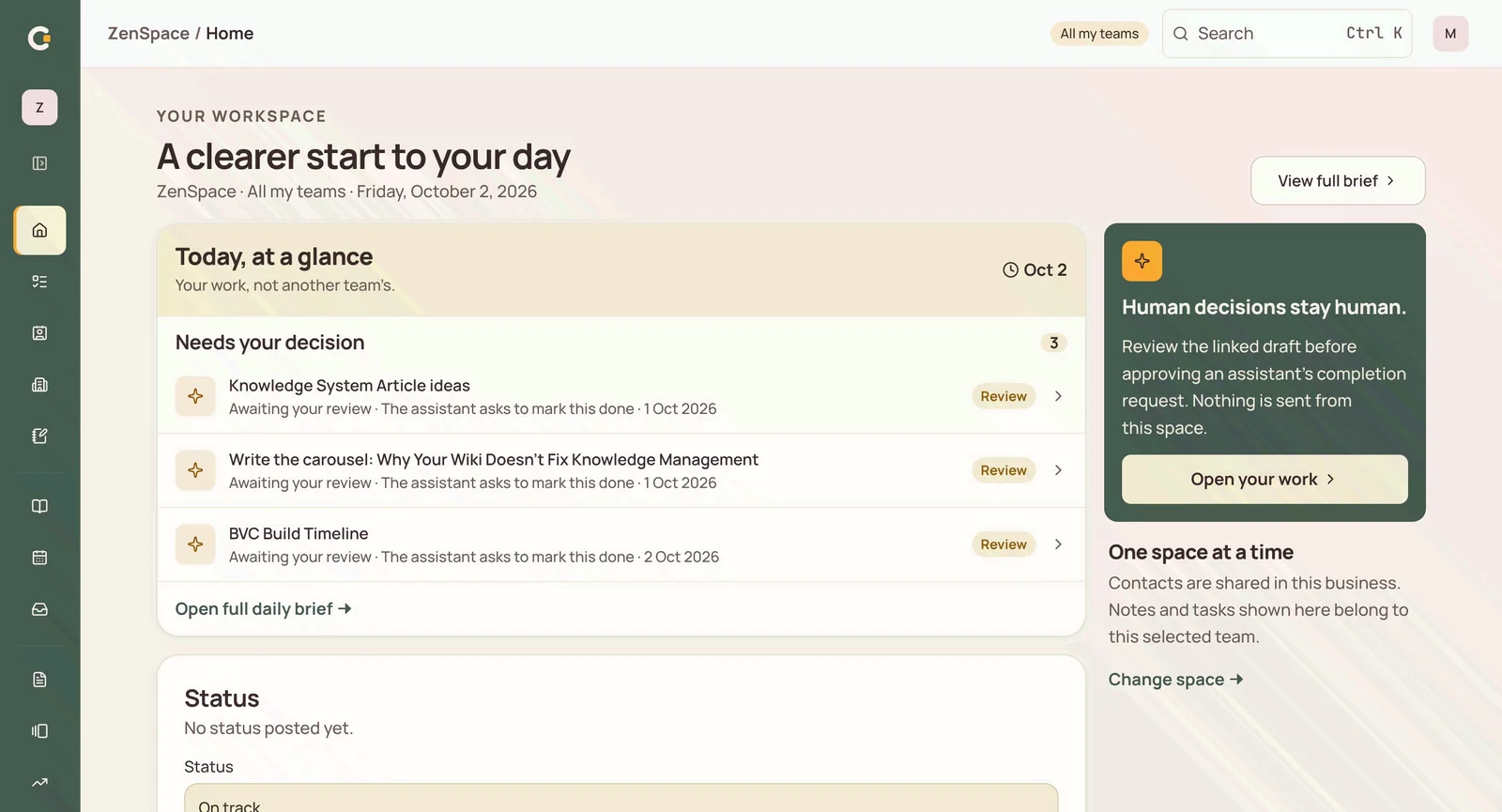
Conversations, lead context, documents, and daily priorities in one place. Reply drafts wait for human review.
It helps the business remember without giving AI permission to speak for the team.
Conversation intelligence
WhatsApp messages, voice notes, and video become a searchable knowledge base with cited answers.
ChatX answers from source material and declines when the source does not support an answer.
Technical diligence · Luma for Thrive Real Estate
Luma turns WhatsApp chats into a sales pipeline with transcripts, translations, and a daily brief. The owner can ask Luma about any buyer or past conversation.
“This is real engineering, not a quick AI-generated patchwork. The tech stack is sensible, the code is well separated, and the project includes migrations and a proper test suite. That matters because AI-assisted changes become much safer when you can immediately verify that nothing broke.”
Messages, documents, and records stop living in separate places where only one person can find them.
The system prepares the right context, draft, or task so the team spends less time chasing information.
Sensitive communication and commitments wait for a person to review and approve.
The system improves around the work your team actually does after it goes live.
Technology should return attention and agency to people.
Days 1 to 7
We trace how the work moves today, where context is lost, what it costs, and where a person must stay in control.
Days 8 to 30
We build the smallest system that changes the outcome and put it in people’s hands while the work is still happening.
Days 31 to 45
We fix what real use exposes, document the boundaries, launch, and agree how the system will be maintained.

Who you work with
ZenRocket AI is run by Mwzimba Russeau, a principal AI engineer. Before building AI systems, Mwzimba led web development at a Japanese startup, worked as a freelance SEO specialist, and reported from war zones as a journalist. Journalism trained the skill this work depends on most: finding out how a business really runs before writing a line of code.
Mwzimba uses code to change the conditions that keep good people overwhelmed. That means honest scoping, source-backed answers, human approval, and systems that leave a team with more attention for the work only people can do.
Lead flow, client delivery, knowledge, and operating systems. The common thread is one costly workflow that generic tools handle badly.
Yes. A knowledge system is one offer, not the whole company. It can sit alongside lead, delivery, CRM, and reporting workflows.
One important workflow with the context, actions, and approval points your team uses every day. The system can grow from there based on real use.
On managed infrastructure or a server your company controls. We agree the access boundaries before we build.
Not without an approved change to the system. ZenRocket starts with drafts and human approval for sensitive communication.
If a good off-the-shelf product solves the problem, we will tell you to use it. We build when your workflow, judgment, or data is part of how your business wins.
We can keep the system running with hosting, monitoring, backups, model updates, and improvements based on how the team uses it.
No. Bring the part of the work that keeps getting missed, rebuilt, or stuck.
A missed lead, a fragile handoff, or a process that only one person understands is enough to start.
Map the workflow costing your team most